
Off-roading has seen a massive surge in popularity heading into 2026. With more enthusiasts hitting the trails in the US and Australia, the demand for reliable, high-performance 4x4 recovery gear has never been higher. Whether you are navigating the red dunes of the Simpson Desert or the muddy trails of the Pacific Northwest, getting stuck is not a matter of "if," but "when."
When it comes to vehicle-to-vehicle recovery, two main contenders dominate the market: the traditional snatch strap and the modern kinetic recovery rope. While they might seem similar at first glance, the technical differences between them can mean the difference between a smooth recovery and a dangerous mechanical failure. In this guide, we’ll dive deep into the "Kinetic Recovery Rope vs. Snatch Strap" debate to help you decide which one deserves a permanent spot in your recovery kit.
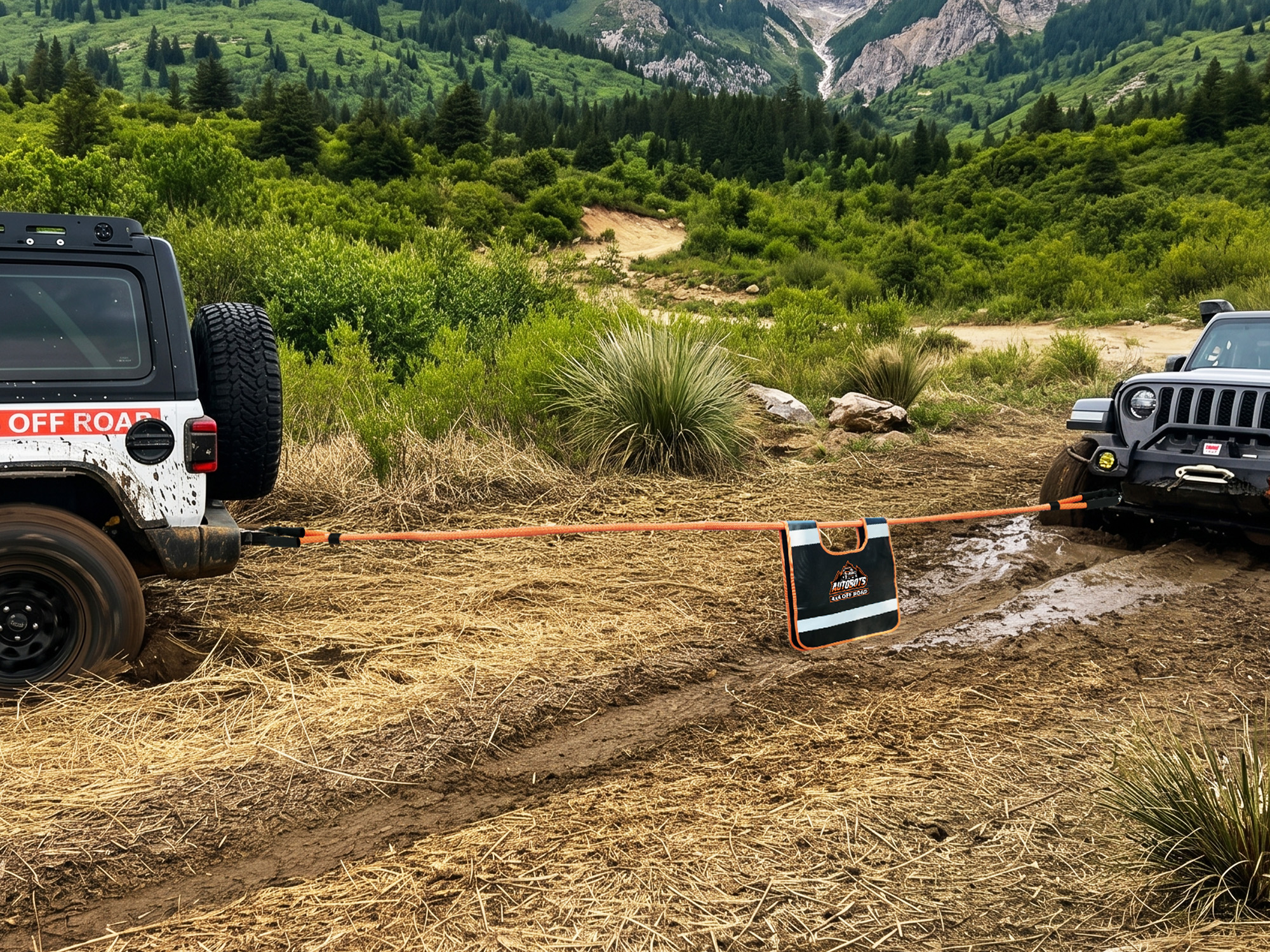
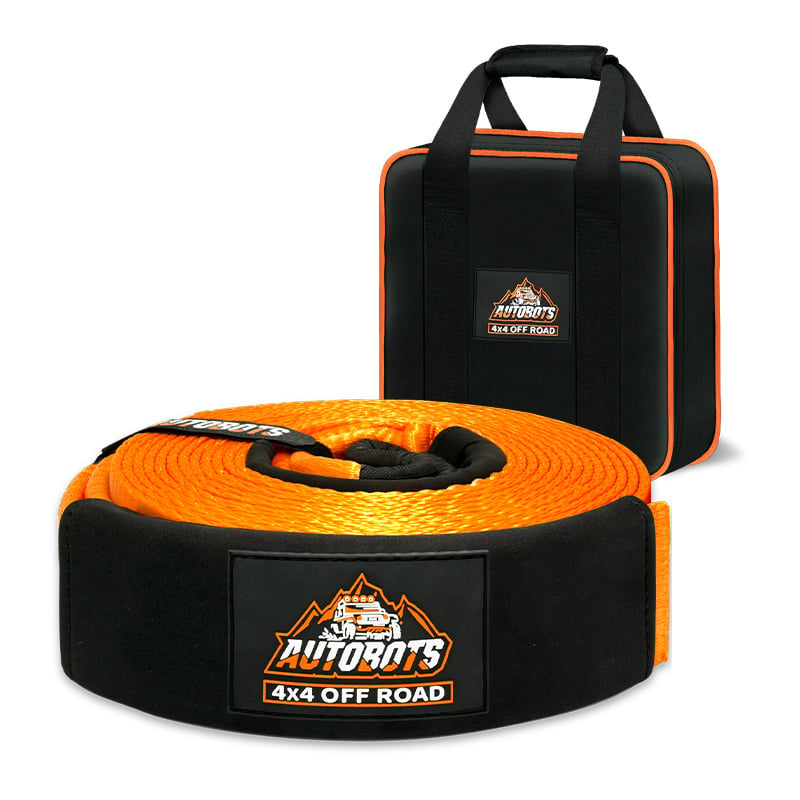
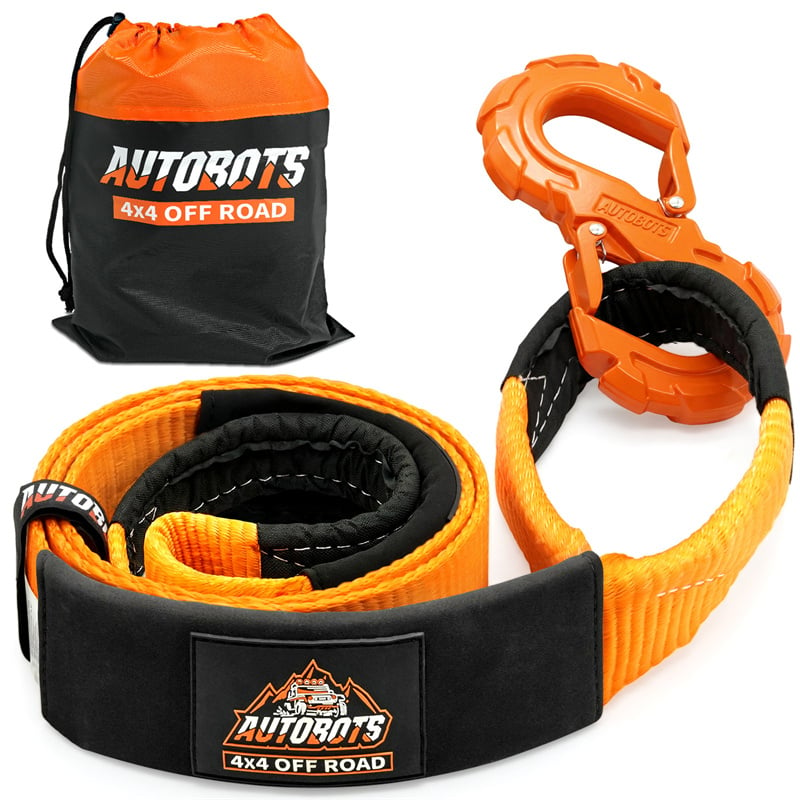
For decades, the snatch strap has been the bread and butter of 4x4 recovery gear. Usually made of flat, woven nylon webbing, these straps are designed to stretch significantly—typically around 20% of their length—when under load.
The physics behind a snatch strap is relatively straightforward. As the recovery vehicle moves away from the stuck vehicle, the strap stretches, storing kinetic energy. When the strap reaches its maximum stretch, it "snaps" back, transferring that energy to the bogged vehicle to pull it free.
Pros of Snatch Straps:
● Compactness: They fold flat and take up very little room in a recovery bag.
● Affordability: Generally cheaper than kinetic ropes, making them accessible for beginners.
● Proven History: They have been used successfully for years across all types of terrain.
Cons of Snatch Straps:
● Limited Stretch: 20% stretch is decent, but it can still result in a "jarring" effect on recovery points if the pull is too aggressive.
● Durability: Flat webbing is more prone to fraying and damage from UV rays or sharp rocks.
● Cleaning: Mud and grit can get trapped in the weave, which is difficult to clean and can weaken the fibers over time.
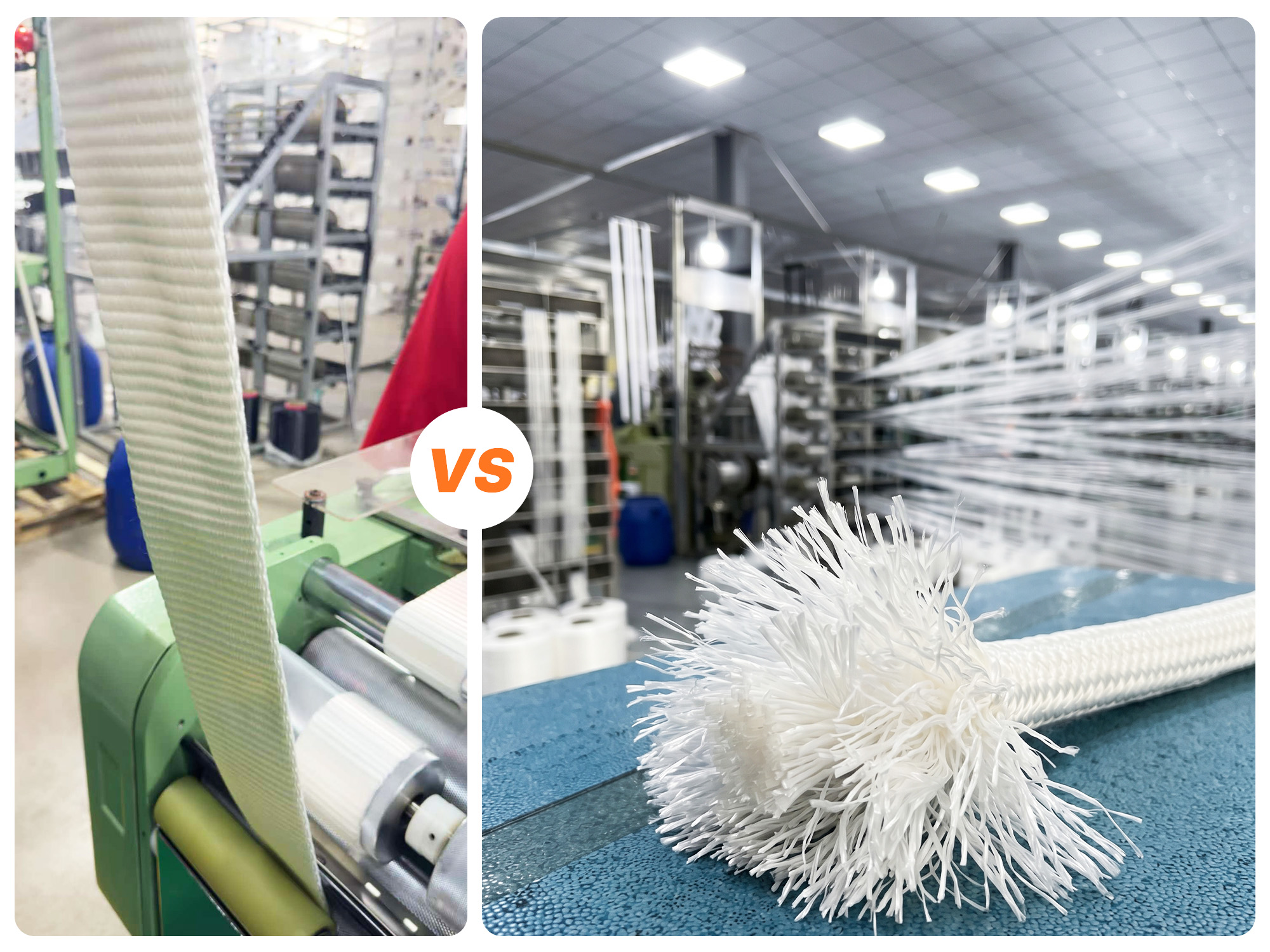
A kinetic recovery rope is the evolved version of the snatch strap. Instead of flat webbing, it uses a double-braided nylon construction. This design allows for significantly more stretch—often up to 30%. This extra 10% might not sound like much, but in the world of physics and recovery, it changes everything.
The double-braided structure consists of a core that handles the load and a protective outer sheath. This allows the rope to expand and contract more like a rubber band than a piece of fabric. The result is a much smoother transfer of energy, which is safer for both the vehicles and the people involved.
1. Kinetic Energy Transfer
The primary advantage of a kinetic recovery rope is its superior stretch. Because it stretches 30% or more, the buildup of energy is more gradual. This reduces the "shock load" on the recovery points of both vehicles. In 2026, as vehicles become more advanced but also more reliant on complex frame designs, minimizing shock load is critical to preventing frame damage.
2. Safety and "The Snap"
When a snatch strap fails, it often snaps violently. Because it is flat, it can "flutter" in the wind or whip back unpredictably. Kinetic ropes, due to their round profile and braided construction, tend to lose energy more safely if a failure occurs. Furthermore, the smoother pull of a kinetic rope means there is less chance of a recovery point being ripped off the chassis—a leading cause of off-road injuries.
3. Longevity and Maintenance
Kinetic ropes are built for the long haul. The outer braid protects the inner core from UV damage and abrasion. While snatch straps can become stiff and brittle after a few years of use, a high-quality kinetic rope remains supple. Additionally, the round design is easier to wash; you can simply hose it down to remove sand and grit that would otherwise act like sandpaper on a flat strap’s fibers.
In 2026, the off-road community is more safety-conscious than ever. Modern 4x4s, including the latest electric trucks and high-tech hybrids, are often heavier than the classic rigs of the past. A heavier vehicle requires more energy to recover, which puts more stress on gear.
The smoother, more powerful pull of a kinetic rope is perfectly suited for these modern, heavy-weight rigs. Enthusiasts in the AU and US are realizing that spending a little more upfront on a kinetic rope is an investment in both safety and the longevity of their vehicles.
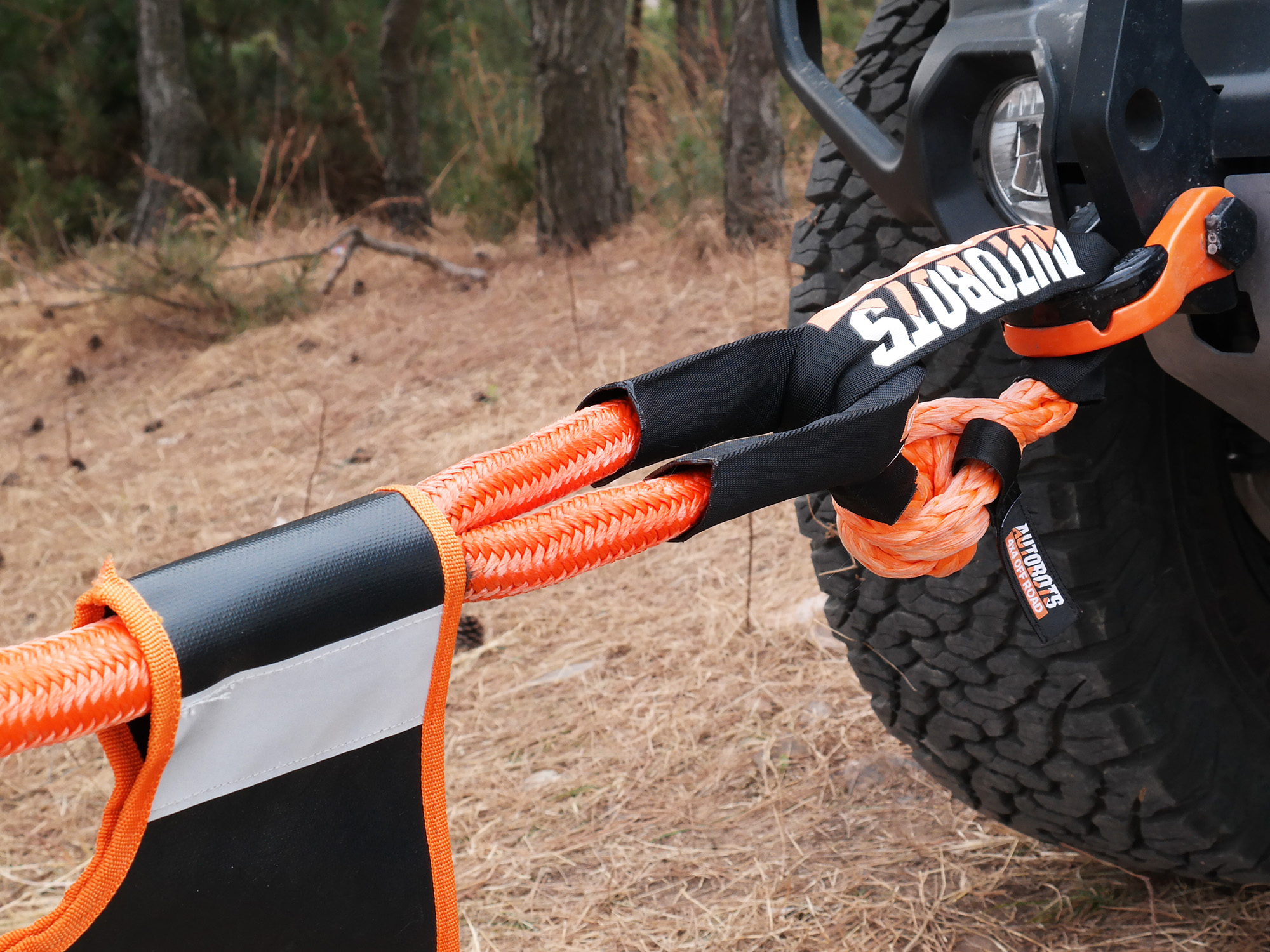
When it comes to high-performance recovery, Autobots 4x4 has set the benchmark for 2026. Their kinetic recovery ropes are engineered specifically for the harsh conditions found in the Australian Outback and the American wilderness.
Technical Excellence of Autobots 4x4 Ropes:
● Extreme Strength: Take, for example, the Autobots 1" x 30' Kinetic Recovery Rope. It boasts a staggering max breaking strength of 48,000 lbs This makes it suitable for everything from mid-size SUVs to heavy-duty trucks.
● Working Load Limit(WLL): With a 16,000 lbs WLL, it provides a massive safety margin for standard recoveries.
● High-Grade Nylon: Uses premium double-braided nylon that ensures a consistent 30% stretch, every time.
● Abrasion Protection: The loops are reinforced with a heavy-duty coating to prevent wear at the most common point of failure—the connection to the shackle.
Autobots 4x4 products aren't just tools; they are peace of mind. When you're stuck in rising tides on Fraser Island or a remote trail in Moab, you need gear that won't fail.
If you are a casual "weekend warrior" who sticks to light trails and is on a strict budget, a snatch strap might suffice. However, for anyone serious about 4x4ing, the kinetic recovery rope is the clear winner for 2026.
Choose a Kinetic Rope if:
● You frequently drive in sand, mud, or snow.
● You have a heavy vehicle or recover others with heavy rigs.
● You prioritize safety and want to minimize stress on your vehicle’s frame.
● You want gear that will last for years of frequent use.
Regardless of which tool you choose, safety is paramount.
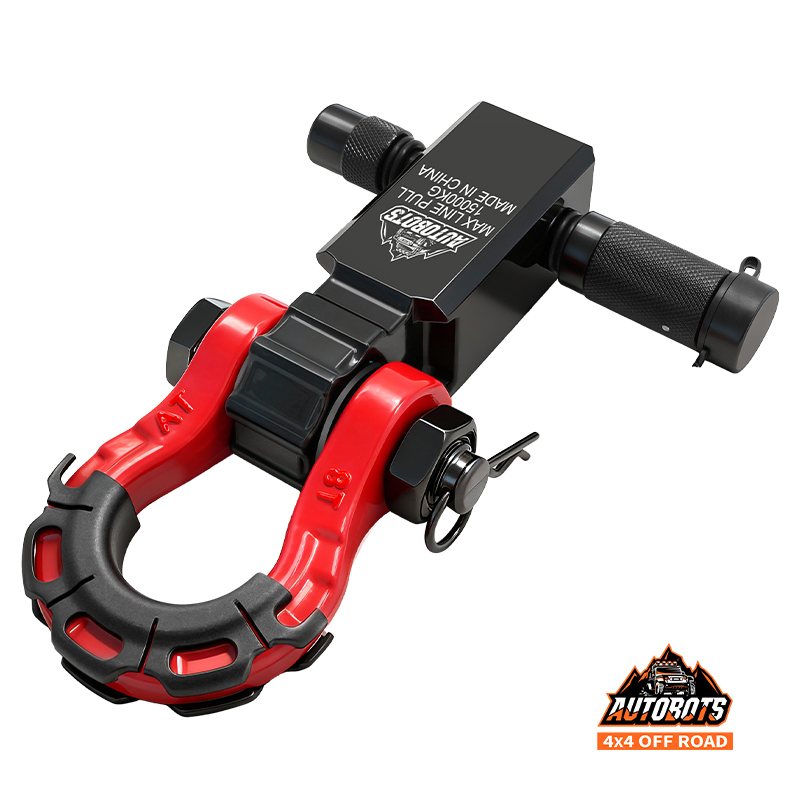
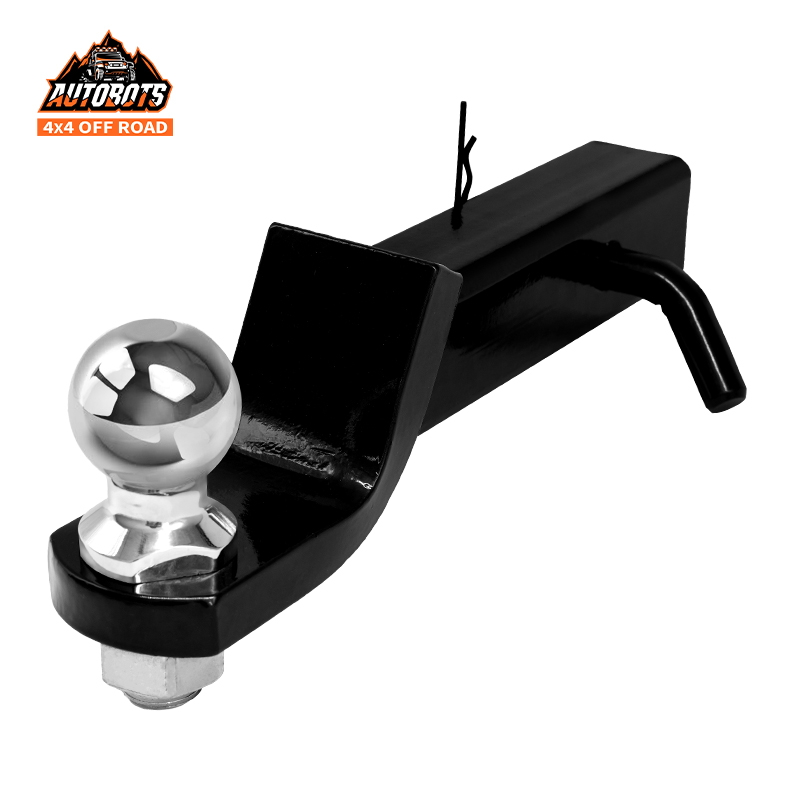
1.Use Rated Points: Never use a tow ball for recovery. Always use rated recovery points.
2. Clear the Area: Ensure all bystanders are at least 1.5 times the length of the rope away.
3. Use Dampeners: Even though kinetic ropes are safer, always use a recovery dampener (or a heavy blanket) to catch the rope in case of a failure.
4. Inspect Your Gear: Before every trip, check your rope or strap for nicks, cuts, or signs of chemical damage.
The evolution of 4x4 recovery gear has brought us to a point where we no longer have to rely on jarring, high-stress pulls to get free. The "Kinetic Recovery Rope vs. Snatch Strap" debate is leaning heavily toward the rope in 2026, and for good reason. With superior stretch, increased safety, and better durability, kinetic ropes like those from Autobots 4x4 are the gold standard.
Are you a distributor or fleet owner looking for heavy-duty recovery solutions?
● Browse our full range of Kinetic Recovery Ropes here.
● Request a Wholesale Price List – Get 2026 pricing and bulk discounts today
Email us at: [email protected] for custom OEM/ODM requests.
 Hot News
2026-05-29
2026-05-22
2026-05-14
2026-01-29
2026-01-23
2026-01-10
Be the first to get our latest styles and offers.
Building7, Rubber Valley Tower, Qingdao, Shandong, China
Copyright © Qingdao Huilisheng Rigging Hardware Product Co., Ltd. All Rights Reserved - Privacy Policy
 EN
EN