
Whether you are navigating the red sands of the Simpson Desert in Australia or crawling through the muddy trails of the Appalachian Mountains in the United States, one truth remains: eventually, you will get stuck. Off-roading is an exercise in unpredictability, and for beginner to intermediate overlanders, the difference between a quick recovery and a multi-day ordeal lies in your 4x4 recovery gear list.
Modern off-road equipment has evolved rapidly, moving away from heavy steel cables and towards lightweight, high-strength synthetic materials. Brands like Autobots 4x4 have pioneered this shift, offering comprehensive recovery categories that prioritize both safety and efficiency. This guide breaks down the essential gear every overlander needs to carry.
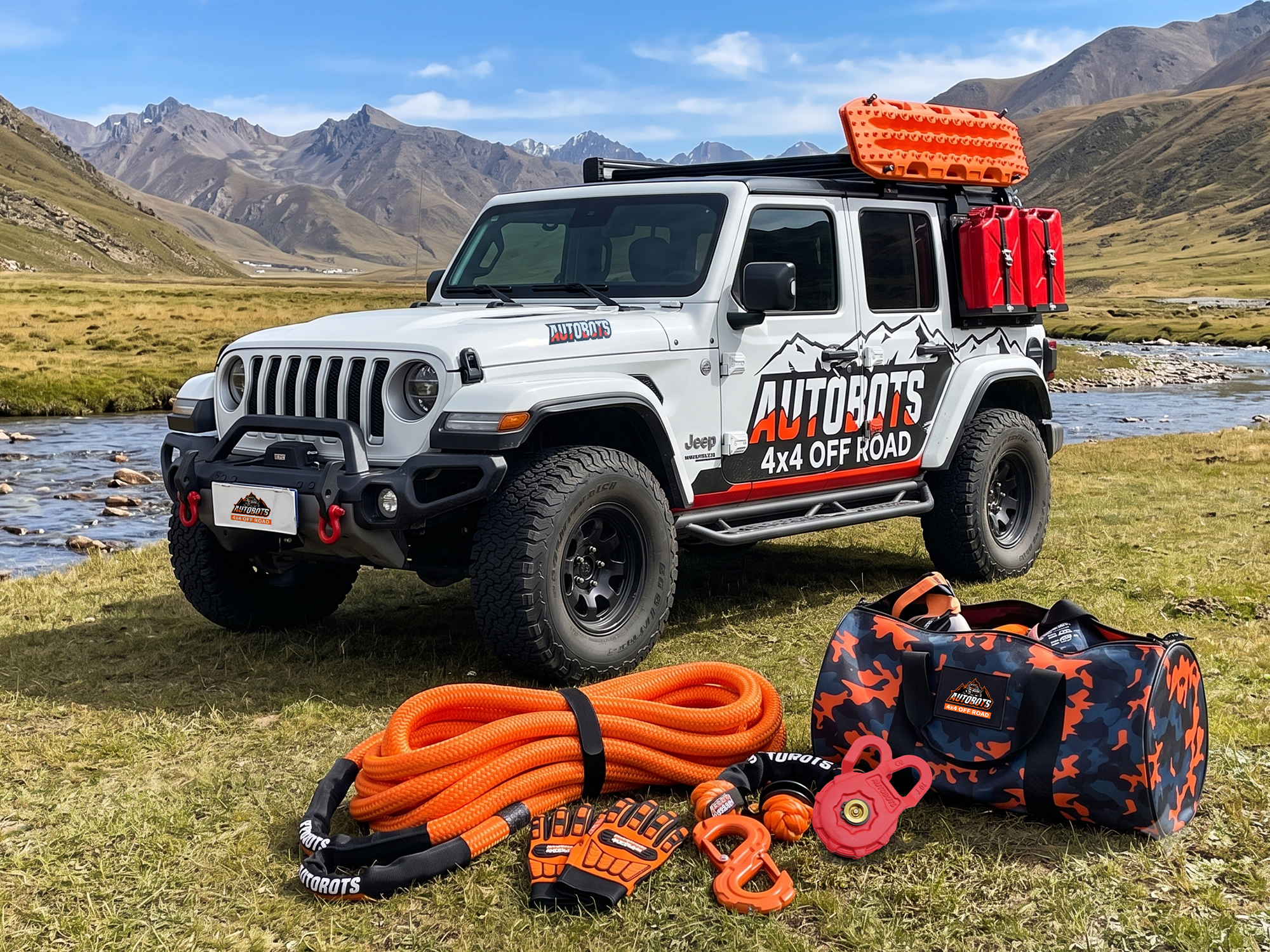
Unlike a standard tow strap, which is static and designed for flat-towing on pavement, a kinetic recovery rope is a dynamic tool. Made from high-quality materials like Nylon 66, these ropes are designed to stretch up to 20-30% of their length. This elasticity allows the recovery vehicle to build momentum, storing energy in the rope and then "snapping" the stuck vehicle out of the mud or sand.
For intermediate users, the Autobots 1" x 30' Kinetic Recovery Rope is a gold standard. With a breaking strength often exceeding 30,000 lbs, it provides a smoother, safer pull than steel chains or static straps. In the Australian Outback, where sand dunes can swallow a vehicle to the chassis, the kinetic rope is often the first tool reached for. In the US, it is indispensable for winter trail runs where deep snow makes static pulling nearly impossible.
When you find your tires spinning uselessly, the first tool you should deploy is often a pair of recovery boards. These "traction tracks" are placed under the tires to provide an immediate high-friction surface, allowing the vehicle to climb out of its own holes.
In Australia, recovery boards (often called traction tracks) are mandatory for beach driving and desert crossings. In the US, they are equally vital for mud and swampy terrain. They are particularly effective for solo overlanders because they don't require a second vehicle or a winch point. When selecting boards, look for reinforced nylon construction that can withstand the weight of a fully laden overlanding rig without cracking.
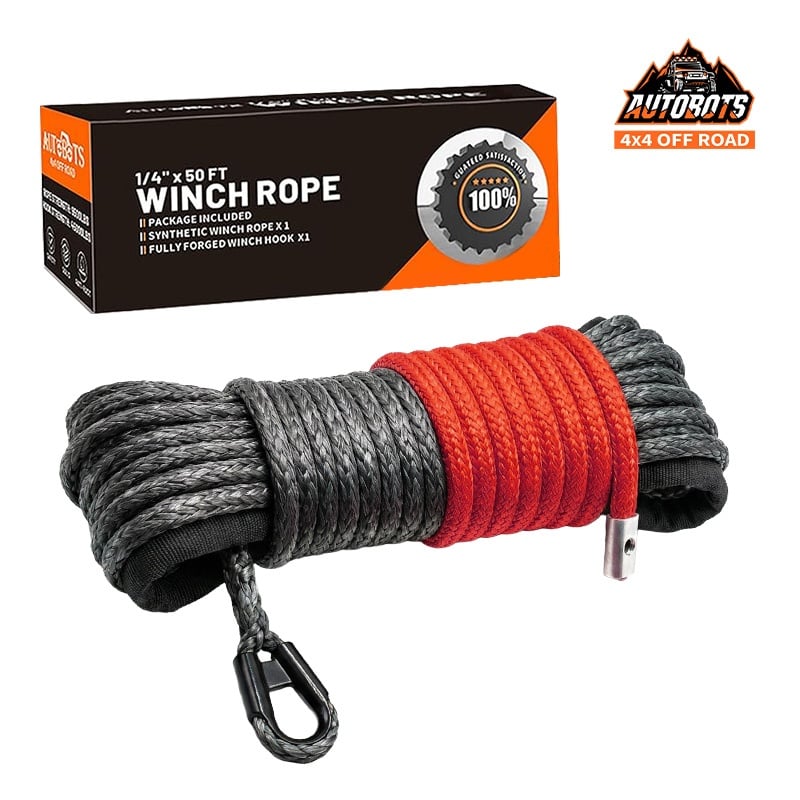
If your vehicle is equipped with a winch, the type of line you use matters. While steel cable was the industry standard for decades, most modern overlanders are switching to synthetic winch rope. Synthetic lines are significantly lighter, float on water, and most importantly, they don't store as much potential energy as steel. If a synthetic line breaks, it typically falls to the ground rather than whipping back with lethal force.
Maintaining a high-quality winch rope is critical. The Autobots synthetic lines are treated with UV-resistant coatings to prevent degradation from the harsh Australian sun or the salty coastal air of the US West Coast. Always ensure your winch rope is paired with a smooth fairlead to prevent fraying.
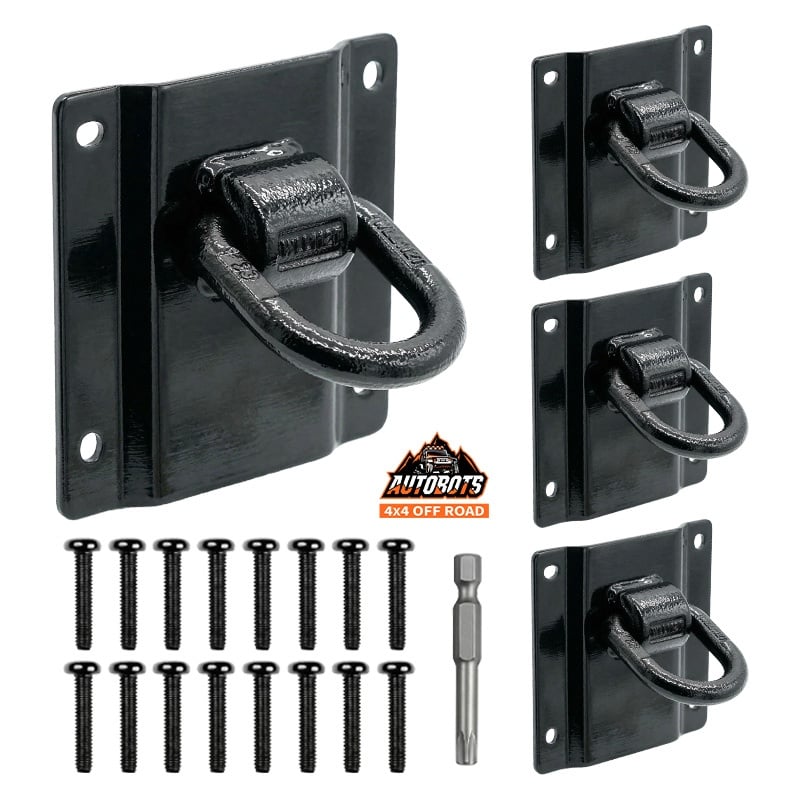
The "weakest link" in any recovery is often the connection point. Traditional steel D-ring shackles are strong but incredibly heavy. If a strap or rope fails, a steel shackle becomes a high-speed projectile. This is why soft shackles have revolutionized the off-road equipment market.
Made from Ultra-High Molecular Weight Polyethylene (UHMWPE), soft shackles are stronger than steel for their size but weigh a fraction of the amount. They are easy to wrap around recovery points that might be difficult for a steel pin to fit through. For a comprehensive recovery kit, carrying at least two soft shackles and two heavy-duty D-rings (for specific metal-to-metal connections) is the recommended intermediate setup.
When a simple pull isn't enough, you need to use physics to your advantage. A snatch block or a modern recovery ring allows you to double the pulling power of your winch by creating a mechanical advantage.
The recovery ring is the newer, lighter cousin of the snatch block. It works by routing the synthetic winch rope through a smooth, circular ring held by a soft shackle. This setup is perfect for the "self-recovery" scenarios common in the remote Australian interior or the dense forests of the Pacific Northwest, where you might need to winch yourself at an angle around an obstacle.
While kinetic ropes are for "snatching," static straps are for steady pulling and anchoring. A tree trunk protector is a wide, non-stretch strap designed to be wrapped around a tree without digging into the bark. This is a critical piece of ethical overlanding gear; using a winch rope or a chain directly on a tree can kill the tree and damage your equipment.
In the US, where many trails are on protected National Forest land, using a tree saver is a matter of trail etiquette and legality. In Australia, protecting the sparse vegetation of the arid regions is equally important.
No 4x4 recovery gear list is complete without the auxiliary tools that facilitate a safe recovery:
● Heavy-Duty Gloves: Protecting your hands from heat, friction, and rope burn is non-negotiable.
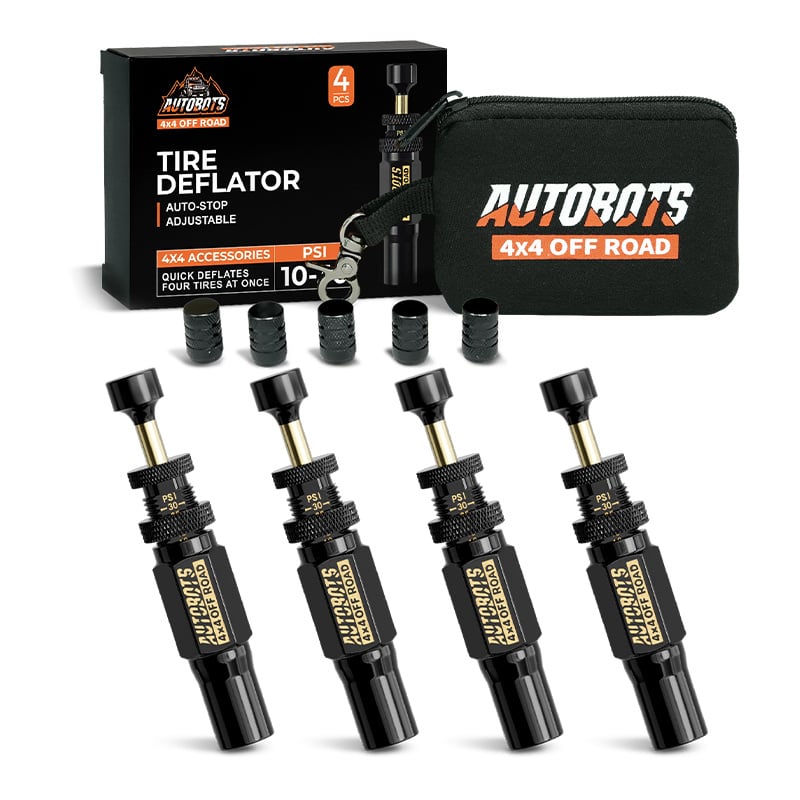
● Tire Deflators: Dropping your tire pressure is the easiest way to increase your footprint and prevent getting stuck in the first place.
● A Quality Shovel: Sometimes, you just need to clear the path before the traction boards can do their work.
● Recovery Damper: If you are still using a steel cable or a heavy snatch strap, a damper (or even a heavy coat) should be draped over the line to absorb energy in case of failure.
While the gear is largely the same, the application varies:
● In Australia: The focus is on sand and heat. Dust ingress can ruin mechanical snatch blocks, which is why the sealed and simple design of recovery rings is gaining massive popularity. High-visibility gear is also preferred for the dusty conditions of the Outback.
● In the United States: Mud, rock, and snow are the primary challenges. Winch ropes need to be checked frequently for abrasion against sharp rocks in places like Moab or the Rubicon Trail.
| Category | Essential Gear | Primary Use |
| Dynamic | Kinetic Recovery Rope | Snatching vehicles from mud/sand |
| Traction | Recovery Boards | Immediate self-recovery |
| Mechanical | Winch Rope & Snatch Block | Heavy-duty pulling & doubling power |
| Connections | Soft Shackles & D-Rings | Safe attachment points |
| Protection | Tree Trunk Protector | Ethical winching from trees |
| Accessories | Gloves, Deflators, Shovel | General safety and preparation |
Building a professional 4x4 recovery gear list is an investment in your safety and the longevity of your vehicle. By focusing on high-quality components from reputable brands like Autobots 4x4, you ensure that when the trail gets tough, you have the tools to get home. Remember: the best recovery is the one that is performed slowly, methodically, and with the right equipment.
 Hot News
2026-05-29
2026-05-22
2026-05-14
2026-01-29
2026-01-23
2026-01-10
Be the first to get our latest styles and offers.
Building7, Rubber Valley Tower, Qingdao, Shandong, China
Copyright © Qingdao Huilisheng Rigging Hardware Product Co., Ltd. All Rights Reserved - Privacy Policy
 EN
EN