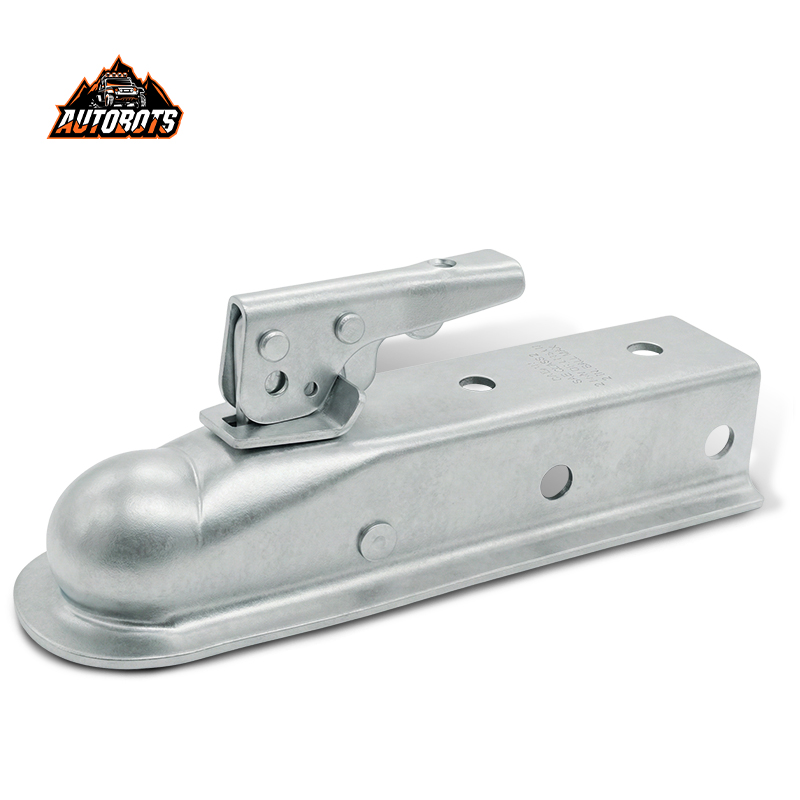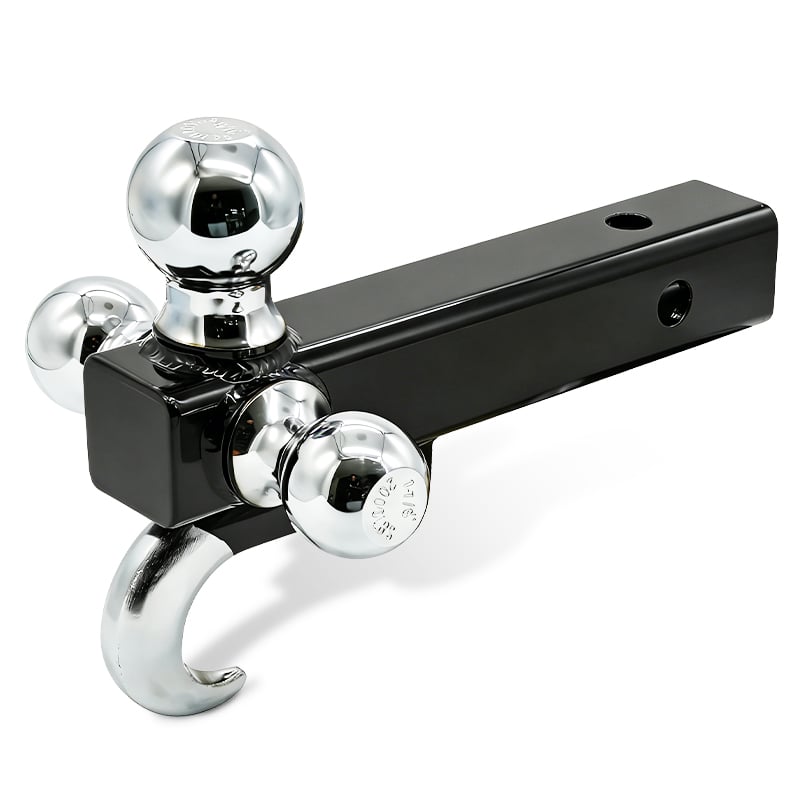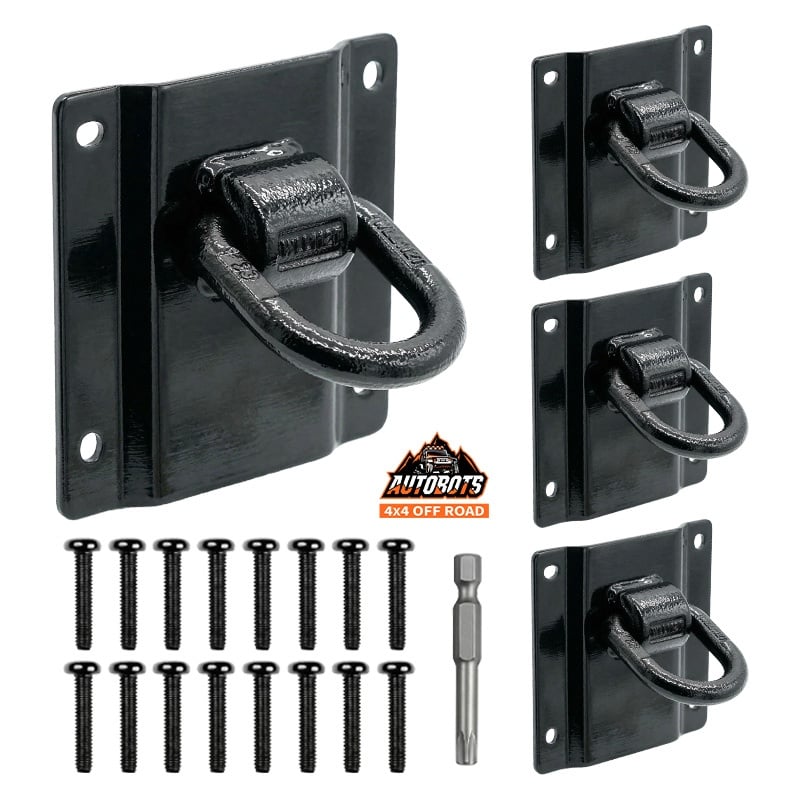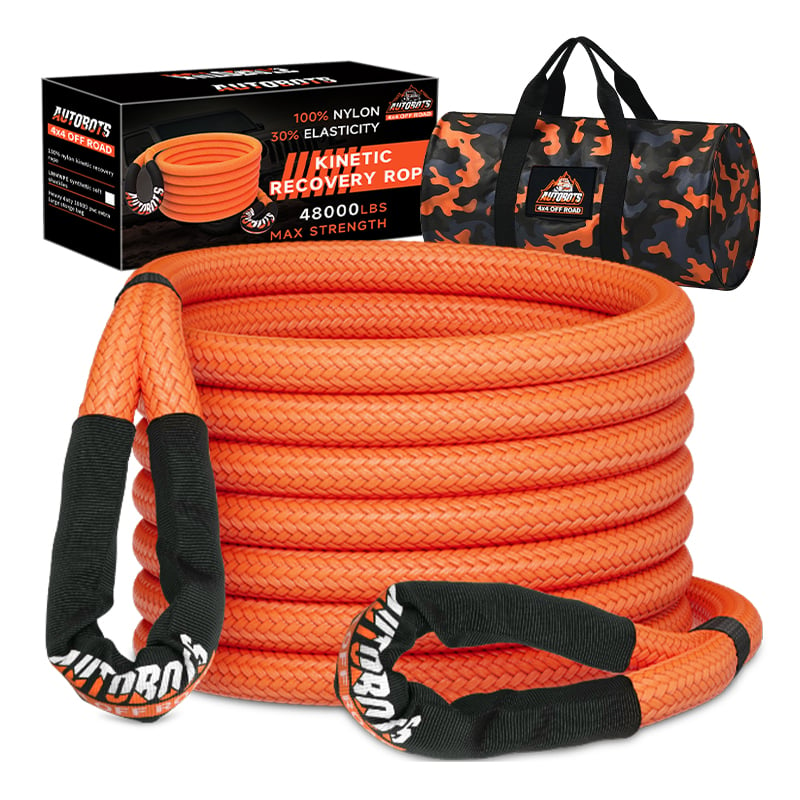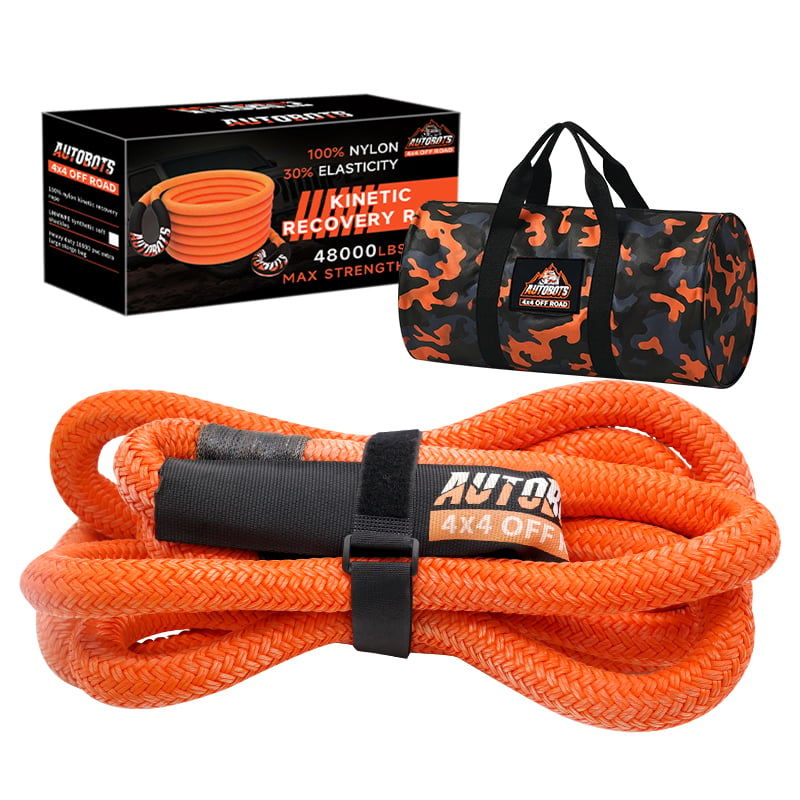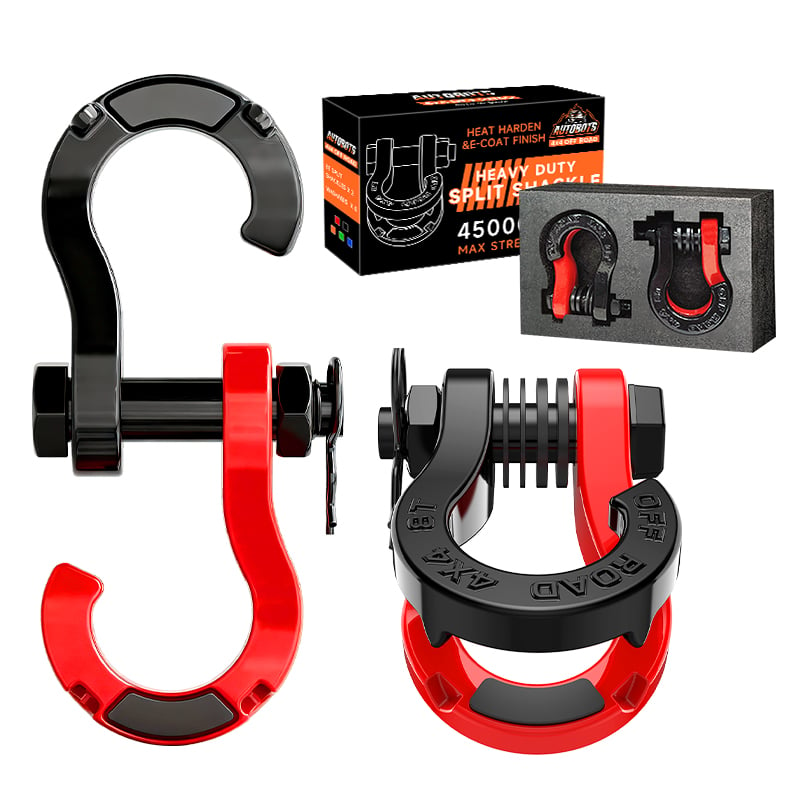

When a standard ball hitch isn't enough, pintle hooks are the go-to for extreme-duty towing in construction, agriculture, military, and off-road recovery. While the traditional 2-inch ball is perfect for the average weekend warrior, commercial and industrial applications demand a connection that can handle massive weight and extreme terrain. Understanding pintle hook weight ratings, lunette ring compatibility, and proper installation is critical for safety and performance.
In this comprehensive pintle hook guide, we’ll break down why this 100-year-old mechanism remains the gold standard for heavy-duty towing and how to choose the right setup for your 2026 fleet requirements.
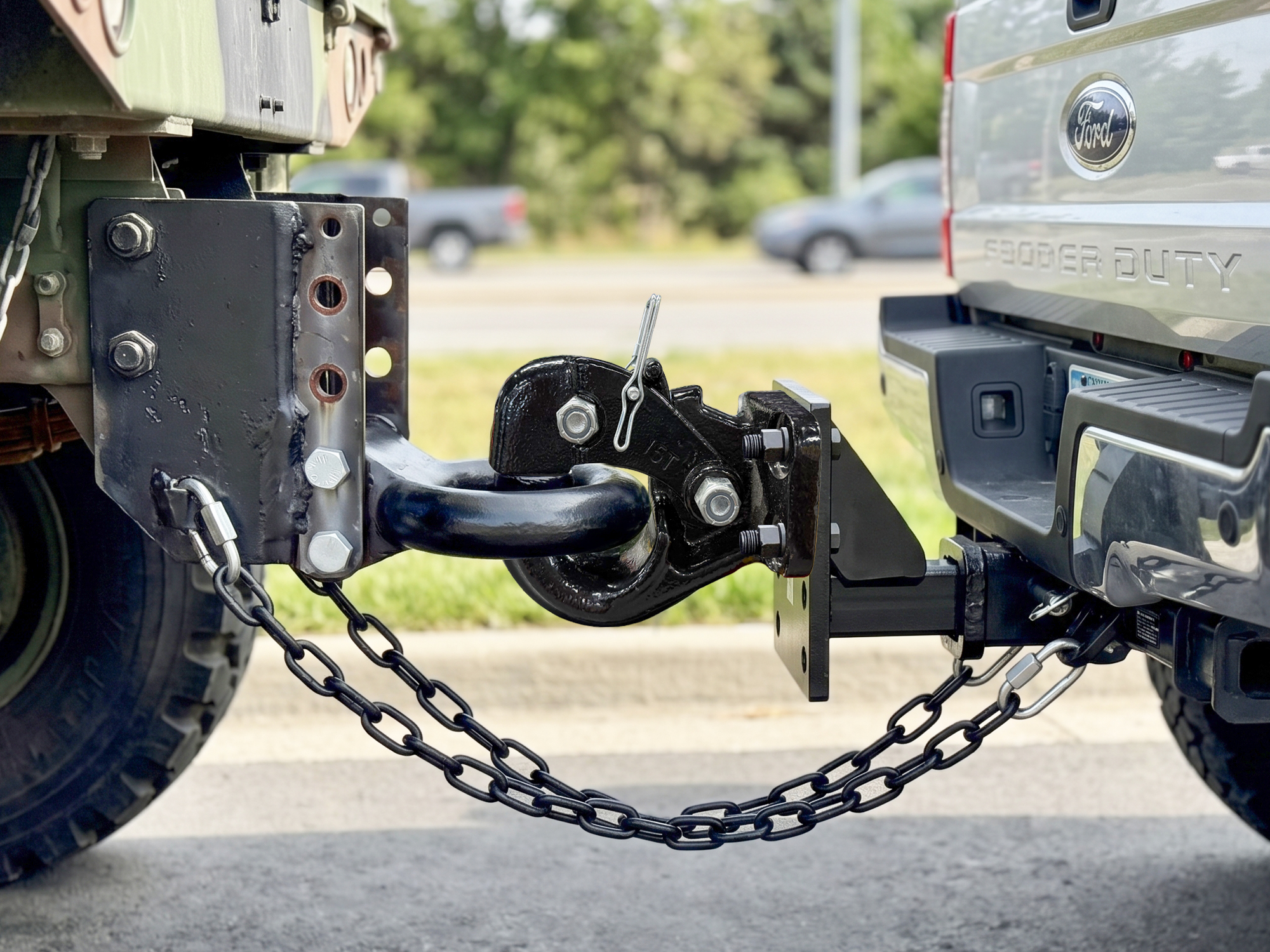
A pintle hook is a specialized towing device consisting of a heavy-duty hook equipped with a locking latch (the "pintle") that closes over a reinforced ring (the "lunette ring"). Unlike a ball hitch, which relies on a socket sitting on top of a ball, the pintle-and-lunette system creates a secure, looped connection.
Military and commercial fleets rely on this mechanism for one primary reason: articulation. Because the ring sits loosely inside the hook’s jaw, it allows for significantly more movement in all directions—pitch, roll, and yaw—than a standard ball coupler. This makes it the only viable choice for towing equipment through uneven construction sites or across rugged off-road terrain where a ball hitch would likely bind or pop off.
The debate of pintle hook vs ball hitch usually comes down to two factors: the environment and the weight.
Why Choose a Pintle Hook?
● Superior Articulation: Ideal for off-road and military use where vehicles aren't on the same plane.
● High Weight Capacity: Easily handles 10 to 30 tons (20,000–60,000 lbs).
● Durability: Forged steel handles shock loads better than standard couplers.
● Quick Connection: Faster to secure in mud or low-visibility conditions.
Why Choose a Ball Hitch?
● Comfort: The tight fit eliminates the "clunking" common with pintle hooks.
● Highway Stability: Better control on smooth pavement due to minimal play.
● Availability: Standard for consumer RVs and small boats.
When selecting commercial towing equipment, you must distinguish between Gross Trailer Weight (GTW) and Vertical Load (tongue weight).
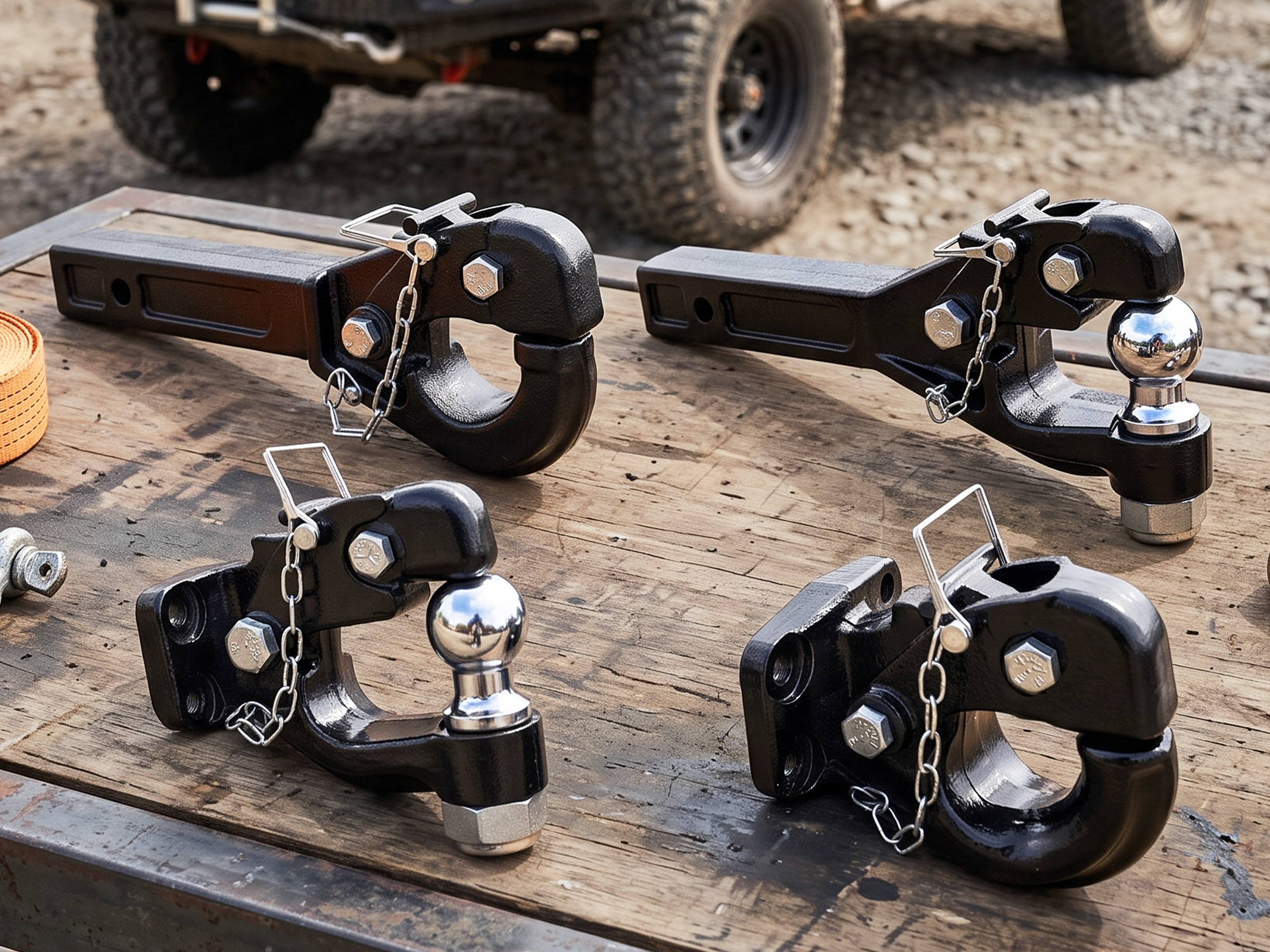
Most heavy-duty pintle hooks are rated in tons. For example, the AUTOBOTS 10-Ton Pintle Hook is rated for 20,000 lbs GTW. However, its vertical load limit—the downward pressure on the hook—is typically around 4,000 lbs (20%). Exceeding these limits can lead to metal fatigue and catastrophic failure.
For those using a standard 2-inch or 2.5-inch receiver, the AUTOBOTS 10-Ton Pintle Hitch Receiver Hook offers a convenient way to add extreme-duty capacity to a standard truck without permanent chassis mounting. Always ensure your vehicle’s hitch receiver and frame are rated to match the hook’s capacity; a 20,000 lb hook is only as strong as the 10,000 lb receiver it’s plugged into.
The pintle hook is useless without a matching lunette ring. These rings come in several varieties depending on the application:
1.Fixed Lunette Rings : Bolted or welded to the trailer tongue; the most common choice.
2.Swivel Lunette Rings : Rotate 360 degrees to prevent trailer rollovers from flipping the tow vehicle.
3.Adjustable Lunette Rings : Mounted on a channel for height adjustment to keep the trailer level.
It is vital to match the ring diameter (usually 2.5" or 3") to the hook size. Mismatched components cause excessive wear and noise.
| Feature | Pintle Hook | Ball Hitch |
| Max Articulation Angle | High (45°+) | Low (15-20°) |
| Weight Capacity | 20,000 - 100,000+ lbs | 2,000 - 30,000 lbs |
| Best Application | Construction, Military, Off-Road | RV, Boats, Highway Towing |
| Noise Level | High (Clunking/Rattling) | Low (Smooth/Quiet) |
| Maintenance | Greasing required; check for wear | Greasing required; check for deformation |
1. Torque Specs: Use Grade 8 bolts and torque to manufacturer specs when mounting a
trailer coupler or pintle hook to a plate.
2. Safety Pin: Never tow without the safety pin inserted; it prevents the latch from opening under shock.
3. Wear Limits: Replace components if more than 10% of the material has worn away in the throat or ring.
Pro Tip: To significantly reduce the "clunking" noise and extend the life of your equipment, apply a heavy-duty lithium grease to the contact point where the lunette ring sits in the pintle hook. This reduces friction-induced wear during long-distance hauls.
For 2026, the demand for reliable heavy-duty towing solutions is higher than ever. Whether you are managing a fleet of dump trailers or preparing a 4x4 for remote recovery, the pintle hook remains the most versatile tool in your arsenal. By matching an AUTOBOTS 10-Ton Pintle Hook with the correct lunette ring, you ensure your cargo stays connected no matter how rough the road gets.
 Hot News
2026-05-29
2026-05-22
2026-05-14
2026-01-29
2026-01-23
2026-01-10
Be the first to get our latest styles and offers.
Building7, Rubber Valley Tower, Qingdao, Shandong, China
Copyright © Qingdao Huilisheng Rigging Hardware Product Co., Ltd. All Rights Reserved - Privacy Policy
 EN
EN